By Michael House, Vice President of Infrastructure and Energy Solutions, Siemens Government Technologies

Climate change is now a national security priority. Increasing temperatures, changing precipitation patterns, and more frequent, intense, and unpredictable extreme weather conditions are introducing infrastructure vulnerabilities. Yet, climate change presents a new and very different type of national security challenge.
Unlike most conventional security threats that involve a single entity acting in specific ways and points in time, climate change is a threat multiplier. It has the potential to intersect and exacerbate other factors that contribute to security risks. For example, extreme weather and water shortages can increase the risk of political instability and terrorism.
Energy resilience and sustainability is the lifeblood of national security. When federal agencies are energy resilient, they can avoid, prepare for, minimize, adapt to, and recover from unanticipated energy disruptions. But becoming energy resilient requires a shift in investment and effort to facilitate large-scale, climate-smart infrastructure.
In this article, I examine the ways in which federal agencies can improve energy resilience and sustainability through smart infrastructure.
In today’s world we’ve become accustomed to technologies that help reduce energy reliance and cost: think motion-sensitive lighting that turns on and off based on movement, and, thermostats capable of adjusting room temperature based on occupancy levels. While these standalone technologies can have significant benefits and lower overall energy usage, they become “smarter” technologies when integrated together to provide a comprehensive building envelope energy picture.
Such smart technologies not only contribute to energy savings and resilience through less energy use, but they also aid in the effort to address climate change through smarter energy consumption. For instance, intelligent building energy management software can leverage clean energy sources like solar during the daytime, while shedding excess energy generated from renewable sources like solar and wind to battery storage systems for use during nighttime hours. While smart infrastructure spans everything from transportation to energy networks, smart buildings are a core element of improving energy resilience and adaptation to challenges presented by climate change.
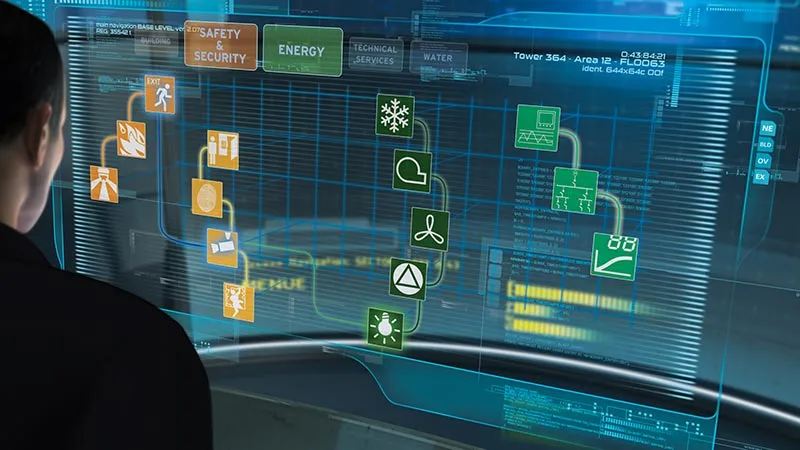
Smart buildings are defined by the International Institute of Sustainable Development (IISD) as “buildings that use information and communication technologies to improve a building’s efficiency, performance, and sustainability.” For the Department of Defense—the single largest energy consumer in the United States—smart buildings are a way to reduce energy consumption and cost, as well as improve readiness and strengthen resilience.
How federal agencies can leverage smart building technologies:
No one-size-fits-all when it comes to smart infrastructure at military installations or federal buildings. In fact, the very nature of smart technology enables flexibility, scalability, and adaptiveness to the primary mission of each site, whether that be combat, housing, education, or manufacturing and maintenance.
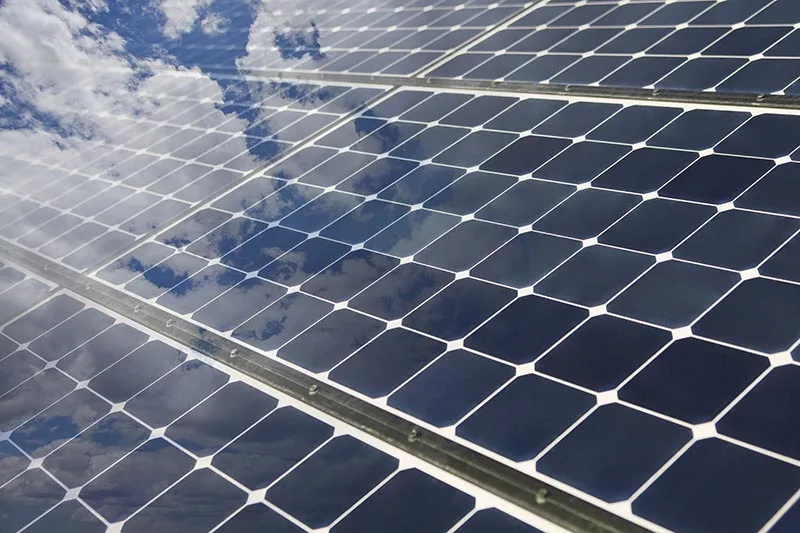
Renewable energy, energy storage, and microgrids are essential for the DoD. In the 2023 National Defense Science and Technology Strategy, the DoD outlined renewable energy generation and storage as integral to securing installations and establishing energy independence.
For these reasons, the DoD has become one of the key drivers of microgrid growth. An excellent example is the U.S. Army’s goal to incorporate a microgrid on every one of its 130 installations worldwide by 2035. Similarly, the U.S. Navy has set a goal to achieve a 50% reduction in emissions from buildings by 2032 while deploying cyber-secure microgrids leveraging carbon pollution-free power generation and battery storage to the greatest extent practicable for continuity of critical missions.
The unique characteristics that make microgrids so attractive—including their ability to power critical facilities, enhance community resilience and integrate clean energy resources—are the same characteristics that often present barriers to adoption.
Siemens Government Technologies (SGT) has operational experience in serving federal customers with customized microgrid solutions. Because the needs of each installation vary considerably, microgrids will be equally different in their function and configuration. At SGT, we not only have real world experience implementing microgrid solutions for military customers, we’re also able to draw on the total experience of Siemens, with operational microgrids in place today at universities, hospitals, research facilities and more. Our energy management offerings run the gamut, from holistic, end-to-end solutions or services to individual products and applications. Our design process avoids scope gaps and pain points during implementation, and we can deliver low-cost or no-cost management solutions.
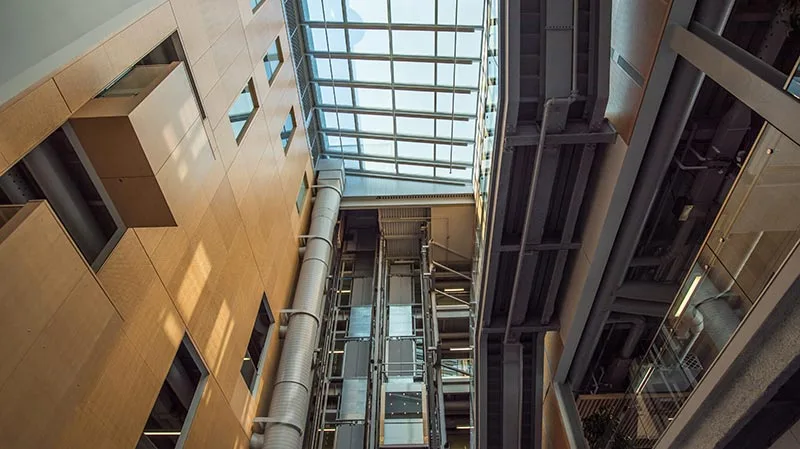
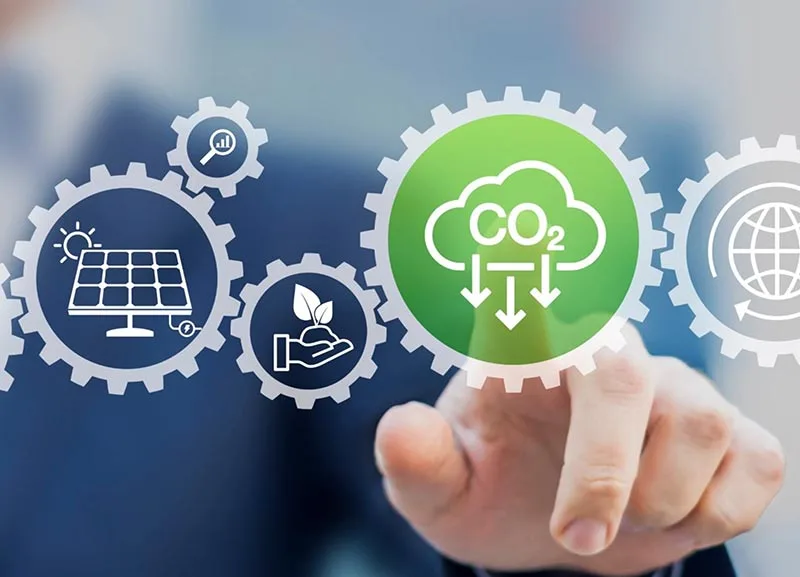
Microgrids are just a component to improving energy resilience and sustainability at military installations. While developing on-site generation and storage is paramount, just as important is the ability to intelligently manage and control energy consumption. Agencies need to be able to throttle down energy consumed by a building in the event of an outage and extend the amount of time the building can run off batteries if needed. They also need to maximize energy efficiency to reduce costs and meet performance KPIs and emission reduction targets.
Therefore, agencies need to couple energy generation and storage solutions with smart building management systems. For example, Building X is a scalable digital building platform from Siemens that manages and optimizes building operations. A holistic, cloud-based platform of data-driven applications and connectivity solutions, Building X can control all systems through a single source of truth that unlocks actionable insights.
To address climate change and build a resilient future, the DoD must invest and deploy smart infrastructure solutions. At Siemens Government Technologies (SGT), we help government and federal agencies respond to the tremendous challenges and unprecedented opportunities that our nation faces today and in the future. As the leading integrator of Siemens’ globally trusted products and services for federal government customers, SGT is well-suited to help the DoD modernize infrastructure and combat climate change. With experience in custom microgrids for federal customers, to our portfolio of smart infrastructure solutions, SGT has the innovation to achieve your mission.
Michael House is the Vice President of Infrastructure & Energy Solutions of Siemens Government Technologies (SGT), Inc., the separate but affiliated U.S. government arm of technology powerhouse Siemens. With over 25 years of experience in technical, program, and business development, House is a veteran government contract leader. Prior to joining SGT, House worked with AECOM, leading the organization’s Energy Consulting Services Business in the Americas. Before AECOM, House served as the Department Manager of Infrastructure Security and Resiliency at URS and a Program Manager at Northrop Grumman, where he and his team were responsible for the delivery of space-qualified hardware for NASA and other government agencies. Now, at SGT, House leads all business capture planning, development and proposal operations, tailoring solutions for inherently complex government customer missions.
Read his full bio here.
Back to Articles